
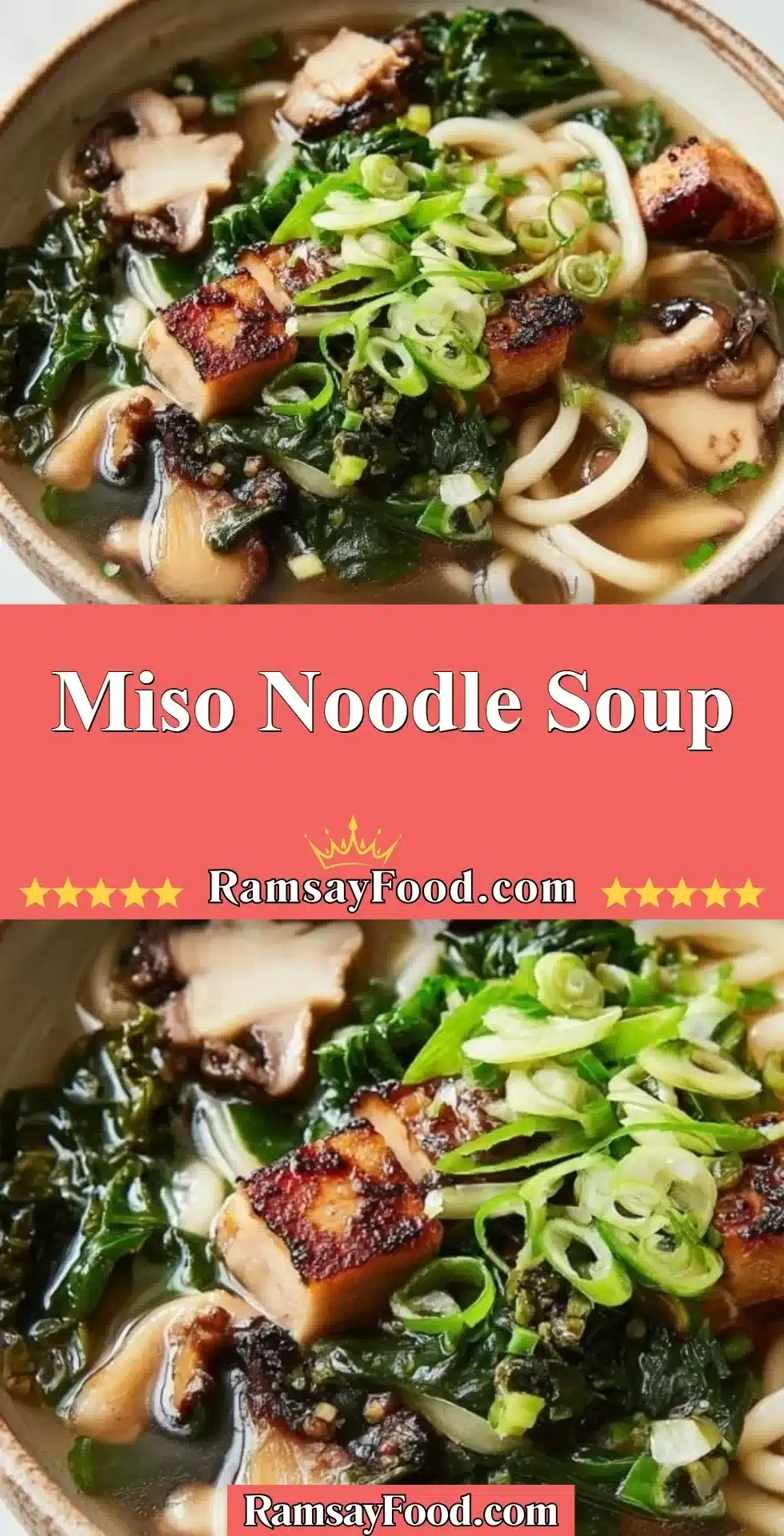
When I first discovered Miso Noodle Soup, it felt like a warm embrace on a chilly evening. It was one of those magical moments in the kitchen that you hold onto—an experience that not only fills your belly but also nourishes your soul. My first taste was at a small, unassuming café nestled in the heart of Asheville, where the aroma of simmering broth and fresh ingredients wafted through the air, beckoning me to come inside. The bowl, steaming and vibrant, held glossy noodles intertwined with green onions, delicate mushrooms, and a generous swirl of miso. The first sip brought with it a rush of umami—the kind that makes you feel as though everything is right in the world, if only for a moment.
I remember that cozy café, lit softly with candles and filled with laughter. The soup warmed not only my hands as I cradled the bowl but also my spirit, reminding me of my grandmother’s kitchen, where love was the secret ingredient. From that first taste, I wanted to recreate this beautiful experience, bringing a touch of Japan into my Southern home—a delightful fusion that felt both familiar yet exotic. Miso Noodle Soup quickly became a family favorite, a dish I now serve on rainy days, during celebrations, or simply when we need a little extra warmth.
Flavor and Popularity
The Unique Flavor Profile of Miso Noodle Soup
Miso Noodle Soup offers a unique flavor profile that is both complex and comforting. The key component, miso paste, is packed with savory umami—a flavor that instantly elevates the dish. Depending on the type of miso you choose, from white to red, the soup can take on varying shades of sweetness and depth. White miso is milder and creamy, while red miso provides a bolder, earthier taste. These rich flavors mingle beautifully with the noodles, creating a symphony of taste that brings joy to every spoonful.
The earthy tones of the miso meld seamlessly with fresh ingredients like sautéed mushrooms and bright green onions. Adding garlic and ginger introduces warmth and depth, turning each bite into a delightful experience. It’s this combination of flavors that has made Miso Noodle Soup a go-to comfort dish for many, embracing the heart of Japanese cuisine while making it accessible to all.
Why This Recipe Is a Family Favorite and Crowd-Pleaser
One of the reasons Miso Noodle Soup has earned a place in my family’s hearts is its versatility. It’s incredibly easy to adapt—like a canvas that welcomes a palette of flavors. Whether you decide to toss in fresh vegetables from your garden or left-over stir-fried chicken, the soup never fails to impress. Each family member can customize their bowl, making it an interactive meal that brings everyone together.
Whenever I serve this dish, it sparks joy and conversation. My children reminisce about their first tastes and how they experimented with the ingredients over the years. Friends who visit often ask for the recipe, which makes me smile because there’s something heartwarming about sharing the love of cooking with others. Miso Noodle Soup is more than just a meal; it’s a way to connect, celebrate, and nourish each other.
Ingredients and Preparation
Essential Ingredients and Possible Substitutions
To make Miso Noodle Soup truly shine, you’ll want to gather a few essential ingredients. Here’s what you’ll need:
- Miso Paste: The heart of this dish. Choose white, yellow, or red miso based on your flavor preference.
- Noodles: Soba, udon, or even ramen noodles work wonders for this soup.
- Broth: Use vegetable broth for a lighter option or chicken broth for a richer flavor.
- Mushrooms: Fresh shiitake, button, or oyster mushrooms add depth and texture.
- Vegetables: Think green onions, bok choy, or spinach to enrich the broth.
- Aromatics: Ginger and garlic—essential for building that warm and inviting flavor.
- Tofu (optional): Add firm tofu for protein and a satisfying bite.
- Sesame Oil: Just a drizzle before serving enhances that delightful nutty aroma.
Feeling creative? You can swap the noodles for zucchini noodles for a low-carb option or add fresh herbs like cilantro for a bright touch. Don’t hesitate to experiment with what’s available in your pantry!
Step-by-Step Recipe Instructions with Tips
Now that you have your ingredients, let’s dive into the preparation of Miso Noodle Soup!
Prepare the Broth: Pour your broth into a pot and bring it to a gentle simmer. If you’re using dried seaweed, add it now for a natural depth.
Sauté the Aromatics: In a skillet, heat a teaspoon of sesame oil over medium heat. Add minced garlic and grated ginger, stirring until fragrant—about 30 seconds.
Cook the Mushrooms: Toss in your sliced mushrooms to the skillet. Sauté for 3-5 minutes until they’re softened and slightly caramelized.
Combine: Take the sautéed mixture and add it to the simmering pot. Stir well.
Add Miso: In a small bowl, mix about two tablespoons of miso paste with a ladle of hot broth to dissolve it fully. This prevents clumping. Then, add this mixture to the pot, stirring until everything is well blended.
Noodles and Greens: Add your noodles of choice and let them cook for about 3-4 minutes until tender. Toss in your greens near the end of the cooking process to keep them vibrant and crisp.
Taste and Adjust: Before serving, taste the broth. You might find you want a pinch of salt or a dash of soy sauce for additional flavor.
Serve with Love: Ladle your Miso Noodle Soup into bowls and top with sliced green onions, a sprinkle of sesame seeds, or a drizzle of chili oil if you like a bit of heat.
Cooking this dish fills your kitchen with enticing aromas, and I encourage you to let your heart guide the process. Be playful with your ingredients; the best meals come from the spirit of experimentation!
Cooking Techniques and Tips
How to Cook Miso Noodle Soup Perfectly
To cook Miso Noodle Soup perfectly, keep a few key principles in mind. First, don’t boil miso; always add it to warm broth to preserve its beneficial enzymes and flavors. Second, master the art of timing when adding each ingredient. Vegetables like bok choy add color and nutrition but should be added just before serving to retain their crunch. Lastly, be mindful of your noodle choice; follow package instructions carefully, and remember that they’ll continue to absorb broth, so use your judgment to find the right balance.
Common Mistakes to Avoid
Avoid common pitfalls in Miso Noodle Soup by steering clear of overcooking your vegetables and noodles. They should retain their textures and colors, contributing to both the look and flavor of the dish. Additionally, don’t forget to dissolve your miso before adding it to the pot! Leaving clumps can lead to uneven flavor and texture. Lastly, taste as you go; every ingredient and brand can vary. Adjusting as you cook will help you create a truly special bowl of soup.
Health Benefits and Serving Suggestions
Nutritional Value of Miso Noodle Soup
Miso Noodle Soup is not only a delight for the taste buds, but it’s also packed with nutritional benefits. Miso is a fermented food that is rich in probiotics, aiding digestion and boosting gut health. Adding colorful vegetables increases dietary fiber, vitamins, and minerals, making this soup a nourishing choice for all ages. Tofu adds plant-based protein to the mix, ensuring you feel satisfied while you enjoy this warm bowl of bliss.
Best Ways to Serve and Pair This Dish
When serving Miso Noodle Soup, consider sides that complement its unique flavors. A simple cucumber salad drizzled with rice vinegar can balance the richness of the soup. For even more flavor, serve it alongside steamed dumplings or a light Asian coleslaw. The beauty of this dish is in its simplicity, allowing you to serve it casually or dress it up for a gathering.
FAQ Section
What type of mushrooms are best for Miso Noodle Soup?
Fresh shiitake and oyster mushrooms work wonderfully due to their complex flavors and textures. However, don’t hesitate to use button mushrooms or whatever is available.
Can I use dried garlic instead of fresh?
While fresh garlic brings a vibrant flavor, dried garlic can be a suitable substitute in a pinch. Use about a quarter teaspoon of dried for every clove of fresh.
How do I store leftover Miso Noodle Soup?
Store leftover soup in an airtight container in the refrigerator for up to three days. However, keep in mind that the noodles may absorb the broth and become mushy.
Can I freeze Miso Noodle Soup?
You can freeze the soup, but it’s best to store the broth and noodles separately. This way, you can enjoy the soup at its best without losing texture when reheating.
Conclusion
If you’re like me and see cooking as a way to express love and creativity, then I wholeheartedly encourage you to try making Miso Noodle Soup. There’s something comforting about the warm, rich flavors blending together in a bowl, wrapping you in nostalgia and satisfaction. It’s perfect for any occasion and, trust me, you’ll want to make this again and again. As you indulge in each bite, remember it’s not just a meal—it’s an experience that brings us closer to those we cherish. Happy cooking!
Print
Miso Noodle Soup
- Total Time: 35 minutes
- Yield: 4 servings
- Diet: Vegetarian
Description
A comforting and rich Miso Noodle Soup that combines umami flavors with vibrant vegetables and noodles, perfect for any occasion.
Ingredients
- Miso Paste (white, yellow, or red)
- Noodles (soba, udon, or ramen)
- Vegetable or chicken broth
- Fresh mushrooms (shiitake, button, or oyster)
- Green onions
- Bok choy or spinach
- Ginger
- Garlic
- Firm tofu (optional)
- Sesame oil
Instructions
- Prepare the Broth: Pour your broth into a pot and bring it to a gentle simmer. If using dried seaweed, add it now.
- Sauté the Aromatics: Heat sesame oil in a skillet, add minced garlic and grated ginger, and stir for 30 seconds.
- Cook the Mushrooms: Add sliced mushrooms to the skillet and sauté for 3-5 minutes.
- Combine: Add the sautéed mixture to the broth and stir well.
- Add Miso: Mix miso paste with hot broth in a small bowl and dissolve it before adding to the pot.
- Noodles and Greens: Add the noodles and cook for 3-4 minutes, then toss in greens at the end.
- Taste and Adjust: Taste the broth and adjust seasoning as needed.
- Serve: Ladle into bowls and top with green onions, sesame seeds, or chili oil.
Notes
Avoid boiling miso to preserve its beneficial enzymes and flavors. Customize your soup with fresh ingredients and enjoy its versatility.
- Prep Time: 15 minutes
- Cook Time: 20 minutes
- Category: Soup
- Method: Simmering
- Cuisine: Japanese
Nutrition
- Serving Size: 1 serving
- Calories: 350
- Sugar: 5g
- Sodium: 900mg
- Fat: 12g
- Saturated Fat: 2g
- Unsaturated Fat: 8g
- Trans Fat: 0g
- Carbohydrates: 45g
- Fiber: 4g
- Protein: 15g
- Cholesterol: 0mg
Keywords: Miso, Noodle Soup, Vegetarian, Comfort Food, Japanese Cuisine, Cozy Meal