
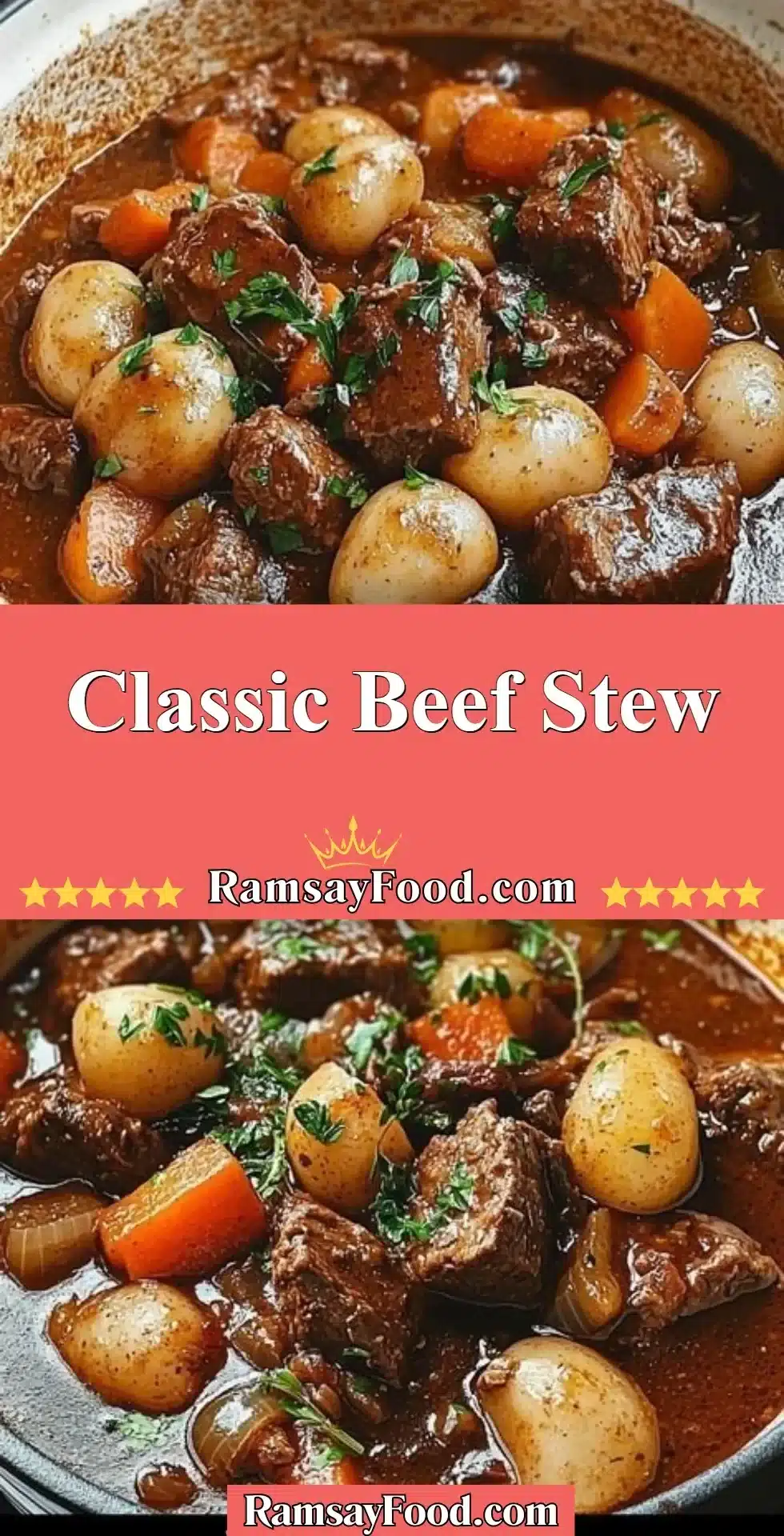
The first time I made Classic Beef Stew, the scents of simmering meat, carrots, and thyme wafted through my kitchen like a warm hug on a chilly day. I remember standing by the stove, stirring the pot while my grandmother shared her secret tips, her words wrapping around me like the comforting aroma of garlic sautéing in olive oil. There’s something ineffably nostalgic about this dish, stirring up memories of family dinners, laughter, and the way our home felt bustling with love. Each ingredient brings its own richness to the pot, and as I watched it bubble, I could hardly wait for the moment we could finally dig in. That first taste of melt-in-your-mouth beef, tender vegetables, and a broth so flavorful it could only be described as "pure comfort" made me understand why this recipe had been passed down through generations.
As I plated the stew that afternoon, a dash of fresh parsley sprinkled on top, I settled down with my family, eager to share my creation. It was more than just a meal; it was the embodiment of everything my grandmother taught me about cooking and caring for those you love. From that day forward, Classic Beef Stew became a cherished recipe in my kitchen—one that I might vary a bit but always return to for those moments when I want to evoke that same warmth and family togetherness.
Flavor and Popularity
The Unique Flavor Profile of Classic Beef Stew
Classic Beef Stew embodies a medley of flavors that marry together seamlessly. The minute you bite into a piece of well-cooked beef, followed by a soft carrot or a chunk of tender potato, you experience a symphony of taste that is rich and hearty. Aromatic herbs like thyme and bay leaves ground the stew, their earthy notes dancing in the background. The beef itself offers a beautiful umami flavor that deepens as it cooks, resulting in a robust, savory broth that begs for a piece of crusty bread to soak it up.
What really makes this dish shine are the layers of flavors that come alive through the slow cooking process. As the ingredients meld together over time, the rich flavors intensify, creating a comforting and deeply satisfying dish. Each spoonful warms you from the inside out, making this classic recipe a staple in many homes, particularly during the cooler months when heartiness is sought after the most.
Why This Recipe Is a Family Favorite and Crowd-Pleaser
When it comes to gatherings, Classic Beef Stew has a way of bringing people together. It serves as the centerpiece of any table, radiating warmth and inviting laughter and storytelling. My family often gathers around the kitchen island, drawn to the bubbling pot—sharing stories as I prepare the ingredients. This dish holds a unique ability to create memories, fostering an atmosphere of togetherness that thrives on comfort and familiarity.
Whether you’re having a few close friends over or hosting a large family dinner, this stew can be made in batches, ensuring there’s plenty to go around. It’s an easy recipe to adapt for larger gatherings; you can even set up a "DIY garnish bar" with chopped parsley, sour cream, or grated cheese, encouraging everyone to customize their bowls. Just about everyone has a childhood memory tied to a comforting stew, making this dish a delightful way to spark conversations and reminisce about old times.
Ingredients and Preparation
Essential Ingredients and Possible Substitutions
To create your very own Classic Beef Stew, gather these essential ingredients:
- Beef Chuck: The star of the dish. You want a cut with good marbling, which will become tender and juicy after slow cooking.
- Vegetables: Traditional choices include carrots, potatoes, and onions. Feel free to experiment with others like parsnips or root vegetables.
- Aromatics: Fresh garlic and onions create a flavor base that enhances the stew profoundly.
- Herbs and Spices: Fresh thyme, bay leaves, and salt and pepper elevate the overall profile.
- Beef Broth: Opt for low-sodium to control the salt levels. For extra richness, you can replace part of the broth with a splash of red wine.
- Oil: To brown the beef, a good quality cooking oil like olive or canola works beautifully.
Now, if you’re out of something or want to switch things up, don’t worry! Here are some helpful substitutions:
- Meat: While chuck roast is classic, a brisket or even stew beef from the grocery store is perfectly acceptable.
- Vegetables: Root vegetables like turnips or sweet potatoes can add a delightful twist. You can even sneak in green beans or bell peppers if you want a change.
- Broth Options: Substitute vegetable broth if you want a lighter stew, or use chicken broth in a pinch.
- Herbs: Dried herbs can replace fresh ones; just make sure to halve the amount, as dried herbs are more potent.
Step-by-Step Recipe Instructions with Tips
Preparation: Start by prepping your ingredients. Dice the beef into chunks, peel and cut the vegetables, and chop the aromatics. Having everything at hand makes cooking smoother.
Browning the Beef: Heat oil in a large pot over medium-high heat. When the oil is hot, add the beef in batches, being careful not to overcrowd the pot. Let it develop a lovely brown crust, which locks in flavor.
Sauté Aromatics: Remove the beef and set it aside. In the same pot, add a little more oil if needed, then toss in the onions and garlic. Sauté until fragrant and translucent, scraping up any browned bits from the bottom of the pot.
Building Flavor: Return the beef to the pot, and add in your vegetables. Toss everything together and then pour in the beef broth and red wine if you’re using it. Toss in your herbs—thyme and bay leaves are my go-tos.
Simmer: Bring the mixture to a gentle boil, then reduce the heat to low. Cover and let your stew simmer for about 2 to 3 hours, stirring occasionally. You want the beef to be fork-tender!
Finishing Touches: Before serving, taste and adjust for seasoning. If the broth feels a bit thin, you can mix a couple of tablespoons of cornstarch with cold water and stir that in to thicken the stew.
Serve: Ladle the stew into bowls and garnish with fresh parsley. It’s even better the next day if you have leftovers, as the flavors meld together beautifully overnight.
Cooking Techniques and Tips
How to Cook Classic Beef Stew Perfectly
Cooking the perfect Classic Beef Stew hinges on a few key techniques. First, always brown the beef—don’t skip this step! This Maillard reaction creates those complex flavors that make your stew so delicious. Remember to cut your meat and vegetables into even-sized pieces. This ensures everything cooks uniformly, preventing some items from being mushy while others remain hard.
Next, patience is key. The longer you let that pot simmer on low heat, the more the flavors will deepen and the meat will tenderize. A slow cooker is another wonderful option if you want a set-it-and-forget-it approach. Simply follow the steps for browning and sautéing, then transfer everything to the slow cooker. Allow it to cook on low for 6 to 8 hours for the best results.
Common Mistakes to Avoid
Achieving the perfect Classic Beef Stew requires attention to detail. Here are some common pitfalls to watch out for:
- Skipping Browning: Never overlook the browning step! It may seem tedious, but it builds flavor that you don’t want to miss.
- Overcooking Vegetables: If cooking for longer periods, consider adding delicate vegetables like peas or green beans towards the end of cooking to prevent mushiness.
- Ignoring Seasoning: Always taste as you go. You’d be surprised how much a pinch of salt or dash of pepper can transform flavors.
- Rushing the Cook Time: Stepping away from the stove for a full simmer transforms the dish. Don’t be tempted to cut the cooking time short.
Health Benefits and Serving Suggestions
Nutritional Value of Classic Beef Stew
Classic Beef Stew is not only comforting but also packs a nutritional punch. It offers good protein from the beef, essential vitamins from the vegetables, and hearty carbohydrates from the potatoes. The diversity of vegetables contributes fiber, which is important for digestion.
While it can be indulgent, you can adjust the recipe to suit your dietary needs. Using lean cuts of meat, adding more vegetables, or even reducing the amount of oil can make it lighter. This dish can also be a good source of iron and vitamin B12, which are crucial for energy production and maintaining a healthy body.
Best Ways to Serve and Pair This Dish
There’s something comforting about serving Classic Beef Stew with a side of crusty bread or fluffy, buttery biscuits. The ideal accompaniments complement the richness of the stew perfectly. Here are some ideas to elevate your dining experience:
- Bread: Offer a baguette or homemade cornbread to soak up the broth.
- Salad: A fresh green salad with a tangy vinaigrette can brighten the meal, cutting through the stew’s richness.
- Wine Pairing: A glass of robust red wine, like Cabernet Sauvignon or Malbec, can enhance the flavors of your stew.
When it comes to presentation, don’t shy away from rustic bowls or even mason jars for a cozy feel. Just looking at it will make people feel at home.
FAQ Section
What type of mushrooms are best for Classic Beef Stew?
Mushrooms can add a lovely earthiness to beef stew. While button mushrooms work fine, I suggest trying cremini or shiitake for a deeper, woodsy flavor. You can even incorporate dried mushrooms, which impart a concentrated umami punch when rehydrated and added to the mix.
Can I use dried garlic instead of fresh?
While fresh garlic is always preferable for that vibrant flavor, if you only have dried garlic on hand, it can work in a pinch. Use about one-third the amount since dried spices are more potent. Keep in mind that the texture and freshness will differ, but your stew will still come out delicious.
How do I store leftover Classic Beef Stew?
Leftover beef stew stores beautifully in the fridge for up to three days. Just let it cool before transferring it to an airtight container. When you’re ready to enjoy leftovers, gently reheat it on the stovetop over low heat, stirring occasionally to avoid scorching.
Can I freeze Classic Beef Stew?
Absolutely! Classic Beef Stew freezes well, making it a fantastic make-ahead option. Portion it into freezer-safe containers after it cools down entirely. It can last in the freezer for up to three months. To reheat, simply thaw overnight in the fridge and warm gently on the stove with a splash of broth to return to its glorious, comforting state.
Conclusion
If you’re like me, the thought of a hearty meal like Classic Beef Stew brings a smile to your face. As you gather your ingredients and let your pot bubble away, you’ll find that this recipe isn’t just about the food; it’s about the stories told, the laughter shared, and the warmth felt around the table. There’s something undeniably satisfying about serving it to loved ones, watching them savor every bite as they reminisce and create new memories. Trust me, you’ll want to make this again and again. It’s heartwarming, nourishing, and, above all, it brings people together!
Print
Classic Beef Stew
- Total Time: 200 minutes
- Yield: 6 servings 1x
- Diet: None
Description
A comforting and hearty dish combining tender beef, vegetables, and aromatic herbs, perfect for family gatherings.
Ingredients
- 2 lbs beef chuck, cut into chunks
- 4 carrots, sliced
- 4 potatoes, diced
- 1 large onion, chopped
- 3 cloves garlic, minced
- 4 cups beef broth
- 1 cup red wine (optional)
- 2 tablespoons olive oil
- 2 sprigs fresh thyme
- 2 bay leaves
- Salt and pepper to taste
Instructions
- Prep your ingredients by chopping beef, vegetables, and aromatics.
- Heat oil in a large pot over medium-high heat and brown the beef in batches.
- Remove the beef and sauté onions and garlic in the same pot.
- Return the beef to the pot, add vegetables, broth, wine, and herbs.
- Bring to a boil, then reduce heat, cover, and simmer for 2 to 3 hours.
- Adjust seasoning and thicken broth if needed before serving.
- Garnish with fresh parsley and enjoy!
Notes
This stew is even better the next day when the flavors meld. Feel free to modify vegetables based on your preference.
- Prep Time: 20 minutes
- Cook Time: 180 minutes
- Category: Main Course
- Method: Stovetop
- Cuisine: American
Nutrition
- Serving Size: 1 serving
- Calories: 450
- Sugar: 7g
- Sodium: 800mg
- Fat: 14g
- Saturated Fat: 5g
- Unsaturated Fat: 7g
- Trans Fat: 0g
- Carbohydrates: 45g
- Fiber: 5g
- Protein: 40g
- Cholesterol: 100mg
Keywords: beef stew, comfort food, hearty meal, family recipe, slow cooking