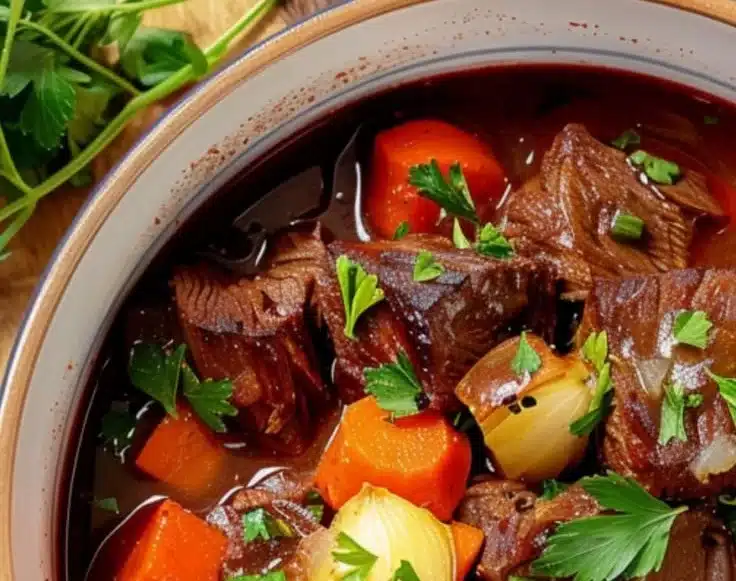
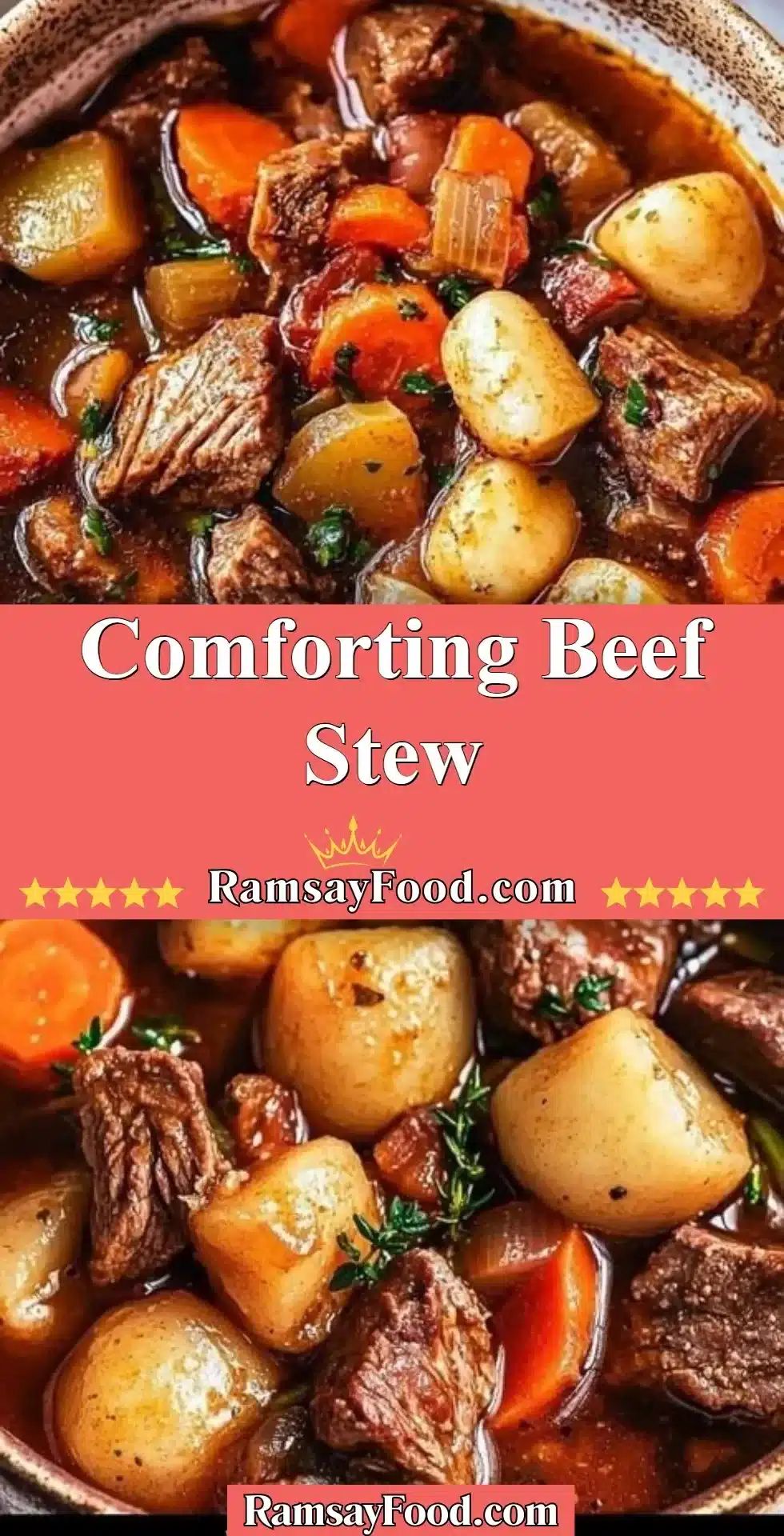
The first pot of Comforting Beef Stew I ever made was a revelation. I can still picture the swirling aromas of seared meat mingling with sautéed onions and garlic wafting through our cozy kitchen in Asheville. I must have been in my late twenties—a novice cook, but eager to impress my friends with a warm dish that felt like a tight embrace. My grandmother had always said that a good stew was the soul of a meal, and as I stood over the pot, stirring in hearty vegetables, I understood what she meant. The steam curling up and tickling my nose felt like a gentle reminder of her love, guiding me through the process.
What struck me most was how comforting this dish could be, not just in its flavors, but in its ability to draw people together. As the beef softened and the broth thickened, I watched as my friends nestled around the table, their laughter wrapping around us like a soft blanket. Each spoonful was a reminder that cooking is not just about feeding the body; it’s about feeding the heart. Now, every time I make a big pot of Comforting Beef Stew, it’s more than just food; it’s a celebration of shared memories, love, and the warmth of family gathered around the table.
Flavor and Popularity
The Unique Flavor Profile of Comforting Beef Stew
There’s something about a well-made beef stew that invokes a sense of nostalgic comfort. The rich, meaty flavor of the beef, beautifully braised until it melts in your mouth, pairs perfectly with the sweetness of caramelized onions and the earthy undertones of carrots and potatoes. This dish is a symphony of flavors that come together to create an umami explosion that dances on your palate.
The secret to the depth of flavor in Comforting Beef Stew often lies in the simple addition of herbs like thyme and bay leaf, which infuse the dish with a fragrant quality. And let’s not forget the star of the show: the broth. Whether you use beef stock or a combination of wine and water, allowing these elements to meld over low heat creates a savory base that elevates the entire dish. It’s no wonder why this recipe has become a family favorite and a staple for gatherings.
Why This Recipe Is a Family Favorite and Crowd-Pleaser
When you think of Comforting Beef Stew, you think of home—of hearths and family and warmth shared on cold evenings. This dish has a universal appeal that transcends generations. Every bite offers a reminder of family gatherings and cherished moments spent around the table.
One of the reasons it’s so beloved is its versatility. You can adjust the ingredients based on what you have in your pantry—adding mushrooms for an earthy touch, or peas for a pop of color and sweetness. It’s like a canvas for creativity, inviting you to explore your own taste preferences while staying true to those comforting, traditional roots. Trust me, no one ever leaves the table unhappy after a hearty serving of this stew!
Ingredients and Preparation
Essential Ingredients and Possible Substitutions
Creating a pot of Comforting Beef Stew is a delightful journey of selecting the right ingredients. To get started, you’ll want to gather a few essentials:
- Beef chuck roast: This cut is perfect for stewing as it becomes incredibly tender when cooked low and slow. If you want a leaner option, consider using sirloin.
- Onions and garlic: These aromatics form the flavor base of your stew. Try using yellow onions for a sweeter taste, or shallots for a more delicate flavor.
- Carrots and potatoes: They add both heartiness and nutrition. You can swap potatoes with parsnips or even use sweet potatoes for a different flavor.
- Beef broth: A good quality broth gives depth. Alternatively, homemade broth injects even more love into the dish.
- Herbs: Fresh thyme and bay leaves are classic, but feel free to experiment with rosemary for an extra aromatic touch.
- Red wine: This ingredient not only enhances flavor but also tenderizes the meat. If you prefer not to use wine, beef stock works well too.
Step-by-Step Recipe Instructions with Tips
To bring your Comforting Beef Stew to life, follow these simple steps:
- Prepare the ingredients: Cut the beef into bite-sized chunks, season generously with salt and pepper, and chop the vegetables.
- Sear the meat: In a large pot or Dutch oven, heat olive oil over medium-high heat. Add the beef in batches to avoid overcrowding, browning it on all sides. This process caramelizes the meat and creates a flavorful crust.
- Sauté the aromatics: Once the beef is browned, remove it from the pot. In the same pot, reduce the heat and add onions and garlic. Sauté until the onions are translucent and fragrant.
- Deglaze the pot: Pour in red wine (if using) and scrape up the browned bits from the bottom. This step adds rich flavor.
- Add the rest of the ingredients: Return the beef to the pot, along with carrots, potatoes, broth, herbs, and a bay leaf. Bring to a simmer.
- Let it stew: Cover and reduce the heat to low, allowing it to cook for about 2 to 3 hours. Stir occasionally, and be ready for the mouthwatering aromas that will fill your kitchen!
- Finish and serve: Taste and adjust seasoning before serving. Garnish with fresh chopped parsley for a touch of brightness.
Cooking tips:
- If you prefer a thicker stew, mix a tablespoon of cornstarch with water and stir it in about 15 minutes before serving.
- For added flavor, consider tossing in some Worcestershire sauce or a teaspoon of tomato paste.
Cooking Techniques and Tips
How to Cook Comforting Beef Stew Perfectly
The key to preparing the perfect Comforting Beef Stew lies in the slow, gentle cook. Patiently allowing your stew to simmer is essential; this is when flavors deepen and meld together, creating that iconic, comforting taste. Using a heavy-bottomed pot or a slow cooker is ideal, providing even heat distribution, which is crucial for tenderizing the beef.
Don’t rush the searing process. Taking the time to properly brown the meat adds a delightful richness to your dish that you simply can’t replicate with quick cooking methods. Remember that great stews often benefit from being made a day ahead; resting allows the flavors to develop even further.
Common Mistakes to Avoid
When embarking on your stewing journey, keep these common pitfalls in mind:
- Overcrowding the pan during browning: This leads to steaming rather than searing, which can result in a less flavorful stew.
- Skipping the aromatics: Neglecting to sauté your onions and garlic can result in a stew that lacks depth. Always start with these flavor-building basics.
- Not seasoning enough: Don’t shy away from seasoning throughout the cooking process—this enhances the flavors at every stage.
Health Benefits and Serving Suggestions
Nutritional Value of Comforting Beef Stew
A well-rounded Comforting Beef Stew offers more than just satisfaction on a cold night; it’s also packed with nutrients. Beef is a fantastic source of protein and iron, while vegetables like carrots and potatoes provide essential vitamins and minerals. A steaming bowl of stew can provide a hearty and nourishing meal, making it a great option for families looking to fill their plates with good food.
Best Ways to Serve and Pair This Dish
Serving your Comforting Beef Stew can be as simple or fancy as you’d like. I love dishing it up hot in large bowls, alongside homemade cornbread or buttery biscuits. Both options are perfect for soaking up the flavorful broth. A crisp green salad adds a refreshing contrast, balancing out the richness of the stew.
For those who want to elevate the experience, consider pairing your stew with a bold red wine to complement its deep flavors. Merlot or Cabernet Sauvignon are especially delightful choices, enhancing the overall dining experience.
FAQ Section
What type of mushrooms are best for Comforting Beef Stew?
For the best results, opt for earthy mushrooms like cremini or shiitake. They provide an additional depth of flavor without overpowering the other ingredients.
Can I use dried garlic instead of fresh?
Yes, you can use dried garlic in a pinch, but I recommend using fresh garlic for a more vibrant flavor. If you choose dried, reduce the quantity since it’s more concentrated.
How do I store leftover Comforting Beef Stew?
Cool the stew completely before transferring it to an airtight container. Store in the refrigerator for up to three days or freeze for longer storage.
Can I freeze Comforting Beef Stew?
Absolutely! Freeze it in portions so you can enjoy it later. Just make sure to leave out any potatoes that may become mushy during freezing.
As I wrap up my thoughts on this lovingly crafted bowl of Comforting Beef Stew, I can’t help but feel hopeful that you—like me—will find joy in both the cooking and sharing of this cherished recipe. There’s something comforting about taking time to prepare a meal that holds history and warmth. Your kitchen will echo with laughter, and your table will be a happy gathering place of kinship. Trust me, you’ll want to make this dish again and again, creating moments to savor long after the last bite is gone.
Print
Comforting Beef Stew
- Total Time: 170 minutes
- Yield: 6 servings 1x
- Diet: None
Description
A hearty and nourishing beef stew that brings warmth and comfort to your table, perfect for family gatherings.
Ingredients
- 2 lbs beef chuck roast, cut into bite-sized chunks
- 2 large onions, chopped
- 4 cloves garlic, minced
- 4 carrots, peeled and chopped
- 4 potatoes, peeled and cubed
- 4 cups beef broth
- 1 cup red wine (optional)
- 2 sprigs fresh thyme
- 2 bay leaves
- Salt and pepper to taste
- Olive oil for searing
Instructions
- Prepare the ingredients: Cut the beef into bite-sized chunks, season generously with salt and pepper, and chop the vegetables.
- Sear the meat: In a large pot or Dutch oven, heat olive oil over medium-high heat. Add the beef in batches to avoid overcrowding, browning it on all sides.
- Sauté the aromatics: Once the beef is browned, remove it from the pot. In the same pot, reduce the heat and add onions and garlic. Sauté until the onions are translucent and fragrant.
- Deglaze the pot: Pour in red wine (if using) and scrape up the browned bits from the bottom.
- Add the rest of the ingredients: Return the beef to the pot, along with carrots, potatoes, broth, herbs, and a bay leaf. Bring to a simmer.
- Let it stew: Cover and reduce the heat to low, allowing it to cook for about 120 to 180 minutes. Stir occasionally.
- Finish and serve: Taste and adjust seasoning before serving. Garnish with fresh chopped parsley.
Notes
For a thicker stew, mix a tablespoon of cornstarch with water and stir it in about 15 minutes before serving. Consider adding Worcestershire sauce or a teaspoon of tomato paste for additional flavor.
- Prep Time: 20 minutes
- Cook Time: 150 minutes
- Category: Main Course
- Method: Stovetop
- Cuisine: American
Nutrition
- Serving Size: 1 serving
- Calories: 450
- Sugar: 6g
- Sodium: 800mg
- Fat: 18g
- Saturated Fat: 6g
- Unsaturated Fat: 10g
- Trans Fat: 0g
- Carbohydrates: 40g
- Fiber: 5g
- Protein: 35g
- Cholesterol: 100mg
Keywords: beef stew, comfort food, family recipe, hearty meal, winter dish