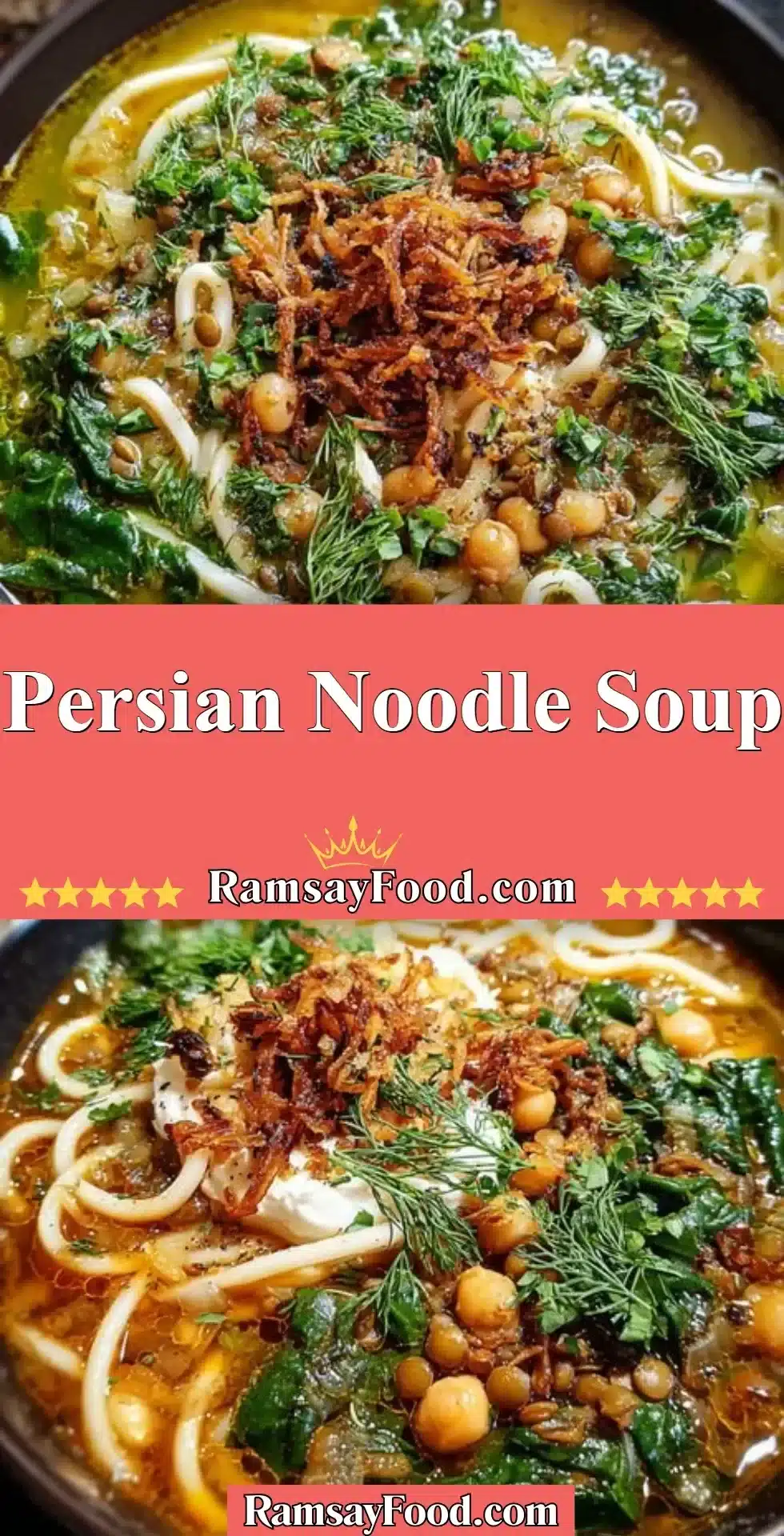
I remember the first time I was introduced to Persian Noodle Soup. It was a crisp autumn afternoon, and the air was fragrant with the scent of cinnamon and cardamom. My dear friend Leila invited me over to her home in Asheville, where her family embraced the beauty of Persian cuisine. As I walked through her door, the warmth wrapped around me like a beloved quilt, and I was greeted with an explosion of colors and spices from the kitchen. There, on the stove, was a bubbling pot of this vibrant soup—a comforting mix of noodles, tender vegetables, and aromatic herbs simmering away.
As I took my first sip of Persian Noodle Soup, the earthy umami flavors danced on my palate, weaving itself into my heart the way my grandmother’s recipes always had. It was different yet familiar, a comforting harmony of tastes that reminded me of the Southern comfort foods of my childhood, infused with a world of flavors I had never explored. That bowl was filled with not just ingredients but stories of family gatherings and cultural richness, echoing with laughter and love. From that day on, Persian Noodle Soup became more than just a dish in my kitchen; it became a bridge between cultures, a shared experience that I cherished and wanted to recreate for my family.
Flavor and Popularity
Persian Noodle Soup has solidified its place as a cherished comfort food in many households for good reason. While each family may have its take on the recipe, they all share a certain depth of flavor and loving intention.
The Unique Flavor Profile of Persian Noodle Soup
The taste of Persian Noodle Soup is a delightful symphony of spices and textures. The base of the soup often features succulent chunks of chicken or beef, which release savory juices into the broth. A medley of vegetables, such as carrots and onions, brings in sweetness, perfectly counterbalanced by the aromatic herbs such as parsley and cilantro, which add a refreshing brightness.
But the real stars of the show, in my opinion, are the noodles. They soak up all the rich flavors and provide a satisfying chew that transforms each bite into an experience. You can also discover exceptional notes from spices commonly found in Persian cuisine—think turmeric, with its warm earthiness, and a hint of lime or lemon zest to enliven the dish.
The flavor profile of Persian Noodle Soup is truly unique; it’s warm and comforting while still being vibrant and spirited, which is why I always think of it as the ultimate crowd-pleaser.
Why This Recipe Is a Family Favorite and Crowd-Pleaser
One of the things I adore about Persian Noodle Soup is how easily it adapts to different tastes and traditions. Whenever I whip up a pot, I not only nourish my family but also create a place at the table for international friendships and shared cultures. Its warmth fills your belly while simultaneously wrapping your heart in comfort.
Over the years, I have hosted several gatherings, and I can safely say that Persian Noodle Soup is often the dish that encourages the most conversation. Friends marvel at the beautiful ingredients, share their own stories of travel, and rave about the flavors that linger long after the last spoonful. It’s a beautiful way to connect and create memories that will last a lifetime.
Ingredients and Preparation
Making Persian Noodle Soup at home involves gathering a few essential ingredients that bring this graceful dish to life.
Essential Ingredients and Possible Substitutions
To make Persian Noodle Soup, you will want to gather a few essential ingredients. Here’s what you’ll need:
- Protein options: You can use chicken (boneless is preferable for quicker cooking) or beef chunks, depending on your preference.
- Noodles: Traditionally, Persian noodles or thin egg noodles work best. For a gluten-free version, look for rice noodles.
- Aromatics: Onions, garlic, and spices such as turmeric and cumin create a flavorful foundation.
- Broth: A rich chicken or beef broth adds depth, but vegetable broth can make it lighter.
- Vegetables: Carrots, bell peppers, and green beans add important nutrients and layers of flavor.
- Fresh herbs: Parsley, cilantro, and sometimes mint help brighten the dish.
- Citrus: A squeeze of lemon at the end brightens all flavors.
- Spices: Don’t forget the essential spices that give this soup its unique flavor, such as paprika and cinnamon.
If you need substitutions, don’t worry! Try using tofu or lentils instead of chicken for a vegetarian twist. You can also swap vegetable broth for chicken broth to keep it lighter. And as for veggies, feel free to use what you have in your kitchen—zucchini or squash can be delightful additions.
Step-by-Step Recipe Instructions with Tips
Prepare your Ingredients: Begin by chopping the vegetables and herbs. Set them aside to have everything at the ready.
Sauté the Aromatics: In a large pot, heat a drizzle of olive oil over medium heat. Add diced onions and sauté until they’re translucent, about 5 minutes. Toss in minced garlic, followed by spices like turmeric and cumin, letting them bloom for added flavor.
Add Protein and Broth: Stir in your selected protein, cooking until it browns slightly, then add the broth. Bring to a simmer.
Incorporate Vegetables: Add your chopped vegetables and let them simmer in the broth, enhancing the flavor, for about 15 minutes.
Noodle Time!: Add in the noodles and let them cook according to package instructions, usually 8-10 minutes.
Finish with Herbs and Citrus: Once the noodles are cooked, stir in chopped parsley and cilantro, ensuring to reserve some for garnishing. A squeeze of fresh lemon or lime juice at the end adds a zesty finish.
Serve and Enjoy: Ladle your delicious Persian Noodle Soup into bowls and top with the remaining fresh herbs.
Remember: The beauty of this recipe lies in its flexibility. Don’t hesitate to customize it to suit your family’s tastes!
Cooking Techniques and Tips
How to Cook Persian Noodle Soup Perfectly
Cooking Persian Noodle Soup can seem intimidating, but with a few simple techniques, you’ll serve up a bowl just like the pros.
- Sautéing your aromatics properly is key; it builds a robust flavor base.
- Mind the noodles! Add them only when the broth has simmered a while. This prevents them from becoming mushy.
- Taste as you cook. Adjust spices, add salt, and consider the brightness from herbs and citrus as the soup develops.
Common Mistakes to Avoid
- Avoid adding too many ingredients at once; the harmony of flavor needs time to blend.
- Don’t neglect the herbs; they add freshness and vibrant flavor that shouldn’t be overlooked.
- Lastly, ensure you let your soup simmer long enough! This gives ingredients time to meld together beautifully.
Health Benefits and Serving Suggestions
Nutritional Value of Persian Noodle Soup
Persian Noodle Soup brings more than just flavor to the table. It’s packed with nutrients from the vegetables and proteins, providing an excellent source of vitamins and minerals. The broth soothes the soul while reaping the benefits of hydration, making it comforting during colder months or when you’re feeling under the weather.
- Protein: Essential for muscle repair and body function.
- Fiber: From vegetables, promotes digestion.
- Herbs: Fresh antioxidants support overall health.
Best Ways to Serve and Pair This Dish
Serve Persian Noodle Soup warm, garnished with fresh herbs and a sprinkle of lemon juice. Pair it with a simple salad tossed in a light vinaigrette for a well-rounded meal. A slice of warm, crusty bread beside the soup can also be a nice touch, perfect for soaking up every last drop!
FAQ Section
What type of mushrooms are best for Persian Noodle Soup?
While traditional recipes may not call for mushrooms, adding sautéed white or shiitake mushrooms can provide a delicious earthy flavor to enhance the soup’s profile.
Can I use dried garlic instead of fresh?
Yes, you can substitute dried garlic, though fresh garlic provides a more robust flavor. Use about 1/4 teaspoon of dried garlic for every clove you replace.
How do I store leftover Persian Noodle Soup?
Store leftover soup in airtight containers in the refrigerator for up to 3-4 days. It may thicken, so add a splash of broth or water when reheating.
Can I freeze Persian Noodle Soup?
Yes, you can freeze it! Just remember to cool it completely before transferring to freezer-safe containers. Enjoy within 3 months for the best flavor.
Conclusion
If you’re like me, you find joy in the kitchen and the flavors that come from different cultures around the world. There’s something comforting about recreating recipes that carry stories of warmth and love, and trust me, you’ll want to make this Persian Noodle Soup again and again. It’s more than just a meal; it’s a connection—a way to share joy with your family and friends. I hope you give it a try and find as much joy in it as I have!
Print
Persian Noodle Soup
- Total Time: 45 minutes
- Yield: 4 servings 1x
- Diet: Gluten-Free, High Protein
Description
A comforting bowl of Persian Noodle Soup filled with tender vegetables, aromatic herbs, and satisfying noodles.
Ingredients
- 1 lb boneless chicken or beef chunks
- 8 oz Persian noodles or thin egg noodles
- 1 medium onion, diced
- 4 cloves garlic, minced
- 1 tsp turmeric
- 1 tsp cumin
- 4 cups chicken or vegetable broth
- 2 carrots, chopped
- 1 bell pepper, chopped
- 1 cup green beans, chopped
- 1/4 cup parsley, chopped
- 1/4 cup cilantro, chopped
- 1 tbsp olive oil
- Juice of 1 lemon
- Spices: paprika and cinnamon to taste
Instructions
- Prepare your ingredients by chopping the vegetables and herbs.
- In a large pot, heat olive oil over medium heat and sauté the onions until translucent, about 5 minutes. Add minced garlic, turmeric, and cumin, letting them bloom.
- Stir in your protein and cook until browned slightly, then add the broth. Bring to a simmer.
- Add the chopped vegetables and let them simmer for about 15 minutes.
- Add the noodles and cook according to package instructions, usually 8-10 minutes.
- Stir in chopped parsley and cilantro, reserving some for garnishing. Finish with a squeeze of fresh lemon juice.
- Ladle into bowls and top with fresh herbs.
Notes
Customize with different vegetables or proteins as per your preference. This soup is rich in flavors and perfect for creating lasting memories around the dinner table.
- Prep Time: 15 minutes
- Cook Time: 30 minutes
- Category: Soup
- Method: Simmering
- Cuisine: Persian
Nutrition
- Serving Size: 1 serving
- Calories: 400
- Sugar: 6g
- Sodium: 600mg
- Fat: 14g
- Saturated Fat: 3g
- Unsaturated Fat: 9g
- Trans Fat: 0g
- Carbohydrates: 45g
- Fiber: 5g
- Protein: 25g
- Cholesterol: 70mg
Keywords: soup, comfort food, Persian, noodle soup, easy recipes