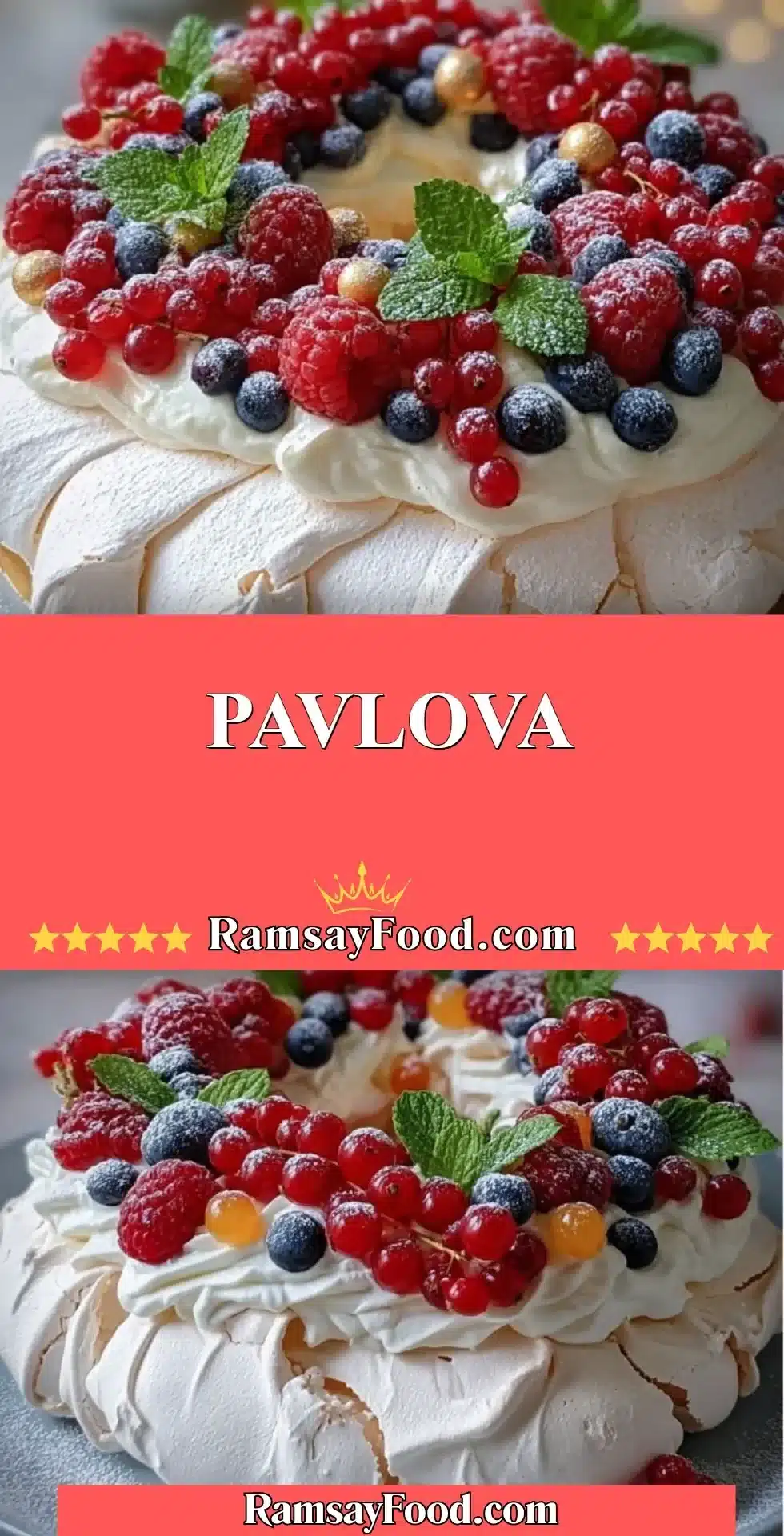
The first time I made Pavlova, I stood in my grandmother’s warm kitchen, the sun streaming through the gingham curtains, bringing to life the vibrant colors of her spice rack. It was a warm spring afternoon, and the smell of fresh flowers wafted in through the open window, mingling with the sweetness of chocolate chip cookies baking in the oven. My grandmother turned to me with her twinkling blue eyes and said, “Maggie, today we’re making something special.” I was bubbling over with curiosity as she revealed a handwritten recipe for Pavlova, a dessert that had danced through our family gatherings for as long as I could remember.
As we whisked the egg whites to lofty peaks, I could feel the excitement rise like the fluffy meringue in the bowl. The kitchen was filled with laughter, her stories flowing freely, each one infused with love and a sprinkle of mischief. When the time came to gently fold in the sugar, the texture transformed into a sweet cloud of promise. I remember peering into the oven, my heart racing as the Pavlova puffed and turned golden. The anticipation was like the best kind of secret waiting to be shared. Topped with whipped cream and a colorful array of fresh strawberries and kiwi, it was a feast for the eyes and the soul. That first bite was a revelation—crispy on the outside, soft and marshmallow-like inside, it brought all the joys of spring to my mouth. The Pavlova had become a cherished symbol of love in our family, a dessert that spoke to my heart and warmed every gathering.
Flavor and Popularity
The Unique Flavor Profile of Pavlova
Pavlova is a delicate, ethereal dessert named after the famed Russian ballerina Anna Pavlova. Its beauty lies not just in its appearance but in its flavor complexity as well. The crunchy exterior gives way to a soft, chewy inside that feels like a hug from an old friend. When you bite into a slice topped with creamy whipped cream and fresh fruit, you encounter a delightful contrast of textures. The sweetness of the meringue plays perfectly against the whipped cream’s richness, while the zesty fruit cuts through, providing that essential balance.
Traditionally, people use seasonal fruits to crown this lovely dessert. In summer, you might reach for ripe berries, while in fall, consider caramelized peaches or poached pears. The beauty of Pavlova is its flexibility; it creates a canvas for flavors that mix and mingle beautifully. With each season, there’s an opportunity to create a new taste experience. Whether serving it for a festive occasion or as a simple weeknight treat, Pavlova remains an enchanting centerpiece worthy of any table.
Why This Recipe Is a Family Favorite and Crowd-Pleaser
Pavlova’s allure has made it a beloved choice for family gatherings and celebrations. Each time I prepare it, I am reminded of those precious afternoons in my grandmother’s kitchen, where the dessert was often a subject of good-natured competition among family members. Every person has their own idea of the perfect topping—some prefer a classic blend of strawberries and kiwis, whereas others go for the exotic twist of mango and passionfruit.
What I love most about serving Pavlova is watching the magic unfold as guests take their first bites. Their eyes widen in surprise and delight, as if they were experiencing something new and extraordinary. There’s something comforting about sharing a dessert that brings people together and sparks conversation. As they relish the delicate flavors, stories begin to flow, laughter fills the air, and for a time, the world outside fades away. No matter the occasion, Pavlova has that special ability to make every gathering feel like a celebration.
Ingredients and Preparation
Essential Ingredients and Possible Substitutions
To craft a beautiful Pavlova, you don’t need to go on a scavenger hunt for exotic ingredients. Here’s what you’ll need to create your own masterpiece:
Egg whites: Use fresh, room-temperature egg whites for the best volume. Always remember, older eggs tend to whip better.
Granulated sugar: This is essential, as it provides the sweetness and stability every meringue needs.
Cornstarch: Adding a bit of cornstarch helps achieve that classic perfect meringue with the right chewiness.
White vinegar or lemon juice: These acids stabilize the whites and add a hint of complexity.
Whipping cream: You can’t have Pavlova without this luscious layer. Use heavy cream for the richest flavor.
Fresh fruit: The crowning glory! Choose fruits like strawberries, kiwi, or raspberries for a beautiful contrast against the white meringue.
If you need substitutions, don’t fret! You can use aquafaba (chickpea water) instead of egg whites for a vegan version. Granulated sugar can be swapped for coconut sugar, though it may change the color slightly. Additionally, any fresh fruit that you love can take center stage—think blueberries, peaches, or even a citrus medley.
Step-by-Step Recipe Instructions with Tips
Making Pavlova may seem daunting, but trust me, it’s simpler than it looks. Here’s how to do it, step by step:
Preheat your oven to 250°F (120°C). Line a baking sheet with parchment paper and draw a circle about 8-9 inches in diameter on the parchment to use as a guide.
In a large mixing bowl, using a handheld mixer or a stand mixer, whisk the egg whites on medium speed until you reach soft peaks. This means the egg whites should be fluffy, with a slightly droopy tip.
Gradually add the granulated sugar, one tablespoon at a time, while continuing to whisk on high speed. Wait until the sugar is fully dissolved before adding more. You want to create a glossy meringue that stands stiff and holds its shape.
Once you reach stiff peaks, sprinkle in the cornstarch, vinegar, and a pinch of salt. Gently fold these into the meringue using a spatula until fully combined.
Transfer the meringue into the circle drawn on the parchment paper, making it higher at the edges to create a nest effect. Use a spatula to smooth the top.
Bake in the preheated oven for about 1.5 hours or until the outside is dry and crisp, but the inside should remain soft. Turn off the oven and let the Pavlova cool completely with the door slightly ajar. This prevents it from collapsing.
Once cooled, carefully lift the meringue off the parchment paper. Whip the cream until soft peaks form and spread it generously over the cooled Pavlova.
Top with an abundance of fresh fruit, and if desired, drizzle with passionfruit pulp or a sprinkle of chocolate shavings.
Serve immediately and watch the smiles blossom!
Cooking Techniques and Tips
How to Cook Pavlova Perfectly
Here are some strategies to ensure your Pavlova turns out perfectly every time:
Room temperature ingredients: Allow your egg whites to come to room temperature before whisking. This helps them whip up better and achieve a greater volume.
Clean bowl: Ensure your mixing bowl and beaters are completely free of grease. A greasy surface can hinder your egg whites from whipping properly.
Don’t rush the sugar: Gradually adding sugar while whisking helps it dissolve fully, resulting in a smoother meringue.
Cool completely: Patience is key. Cooling the Pavlova slowly in the oven helps avoid cracks and ensures that it keeps its shape.
Common Mistakes to Avoid
As with any recipe, there are pitfalls to be aware of when making Pavlova. Here are a few common mistakes to sidestep:
Overwhipping: Whipping the egg whites too much can turn them grainy. Soft peaks to stiff peaks is the goal, but stop before they become dry.
Humidity: Meringue and moisture do not mix well! Avoid making Pavlova on humid days, as the meringue can absorb moisture and become sticky.
Skipping the vinegar: Not adding vinegar or lemon juice when whipping your meringue can lead to less stable pavlova. Don’t skip this step!
Cutting too soon: Wait until serving to whip the cream and top the meringue. This prolongs the Pavlova’s integrity and keeps it from becoming soggy.
Health Benefits and Serving Suggestions
Nutritional Value of Pavlova
While Pavlova is a dessert—indeed, it leans on the sweeter side—it has some redeeming nutritional aspects. The meringue primarily consists of egg whites, which are high in protein and low in fat. When served with fresh fruit, you add vitamins, minerals, and antioxidants, making it a lighter option than many traditional desserts.
Of course, moderation is key. Enjoying a slice of Pavlova as an occasional treat is a delightful way to indulge while still getting those nutritious bits from the fruit toppings.
Best Ways to Serve and Pair This Dish
Pavlova is incredibly versatile and can be paired with many sides. I often serve it with a pitcher of homemade berry sauce or a simple coulis for extra flavor. For an added dimension, consider offering a selection of nuts—crushed pistachios or almonds are excellent options.
It brings sheer delight to serve this dessert during gatherings. Picture this: the elegant white meringue with bright fruit and whipped cream, creating a striking contrast on any table. It’s perfect for brunches, holiday dinners, or simply as a reward for yourself after a long week.
FAQ Section
What type of mushrooms are best for Pavlova?
Mushrooms don’t typically play a role in traditional Pavlova, which focuses on a sweet meringue topped with fruits. If you’re considering savory options, though, delicate varieties such as shiitake or cremini can elevate a dish but not the dessert itself.
Can I use dried garlic instead of fresh?
In the context of Pavlova, garlic doesn’t belong! This dessert is sweet and light, so focus on fresh fruits and creams. However, for savory dishes, fresh garlic typically offers a more vibrant flavor than dried.
How do I store leftover Pavlova?
To enjoy leftover Pavlova, gently cover it with plastic wrap and store it in the fridge. Be mindful, though — the meringue will soften over time, so it’s best consumed within a day or two.
Can I freeze Pavlova?
Freezing Pavlova isn’t advisable. The meringue doesn’t freeze well and often weeps after thawing. It’s best to serve freshly made Pavlova, but you can make the meringue ahead of time and store it in an airtight container until needed.
As I sit here reflecting on my delightful journey with Pavlova, I cannot help but feel grateful for the sweet moments it has brought into my life. If you’re like me, a home cook looking to bring joy to your kitchen, I wholeheartedly encourage you to try this enchanting dessert. There’s something comforting about creating something so simple yet so rewarding. Whether it becomes a family favorite or a new addition to your recipe book, trust me, you’ll want to make this again and again. Enjoy every bite, and share the love with those who bring you joy!
Print
Pavlova
- Total Time: 105 minutes
- Yield: 8 servings 1x
- Diet: Vegetarian
Description
A light and airy dessert with a crispy meringue shell, topped with luscious whipped cream and fresh fruits.
Ingredients
- 4 large egg whites
- 1 cup granulated sugar
- 1 tablespoon cornstarch
- 1 teaspoon white vinegar or lemon juice
- 1 cup heavy whipping cream
- Fresh strawberries, kiwi, and raspberries for topping
Instructions
- Preheat your oven to 250°F (120°C) and line a baking sheet with parchment paper, drawing a circle about 8-9 inches in diameter.
- In a mixing bowl, whisk the egg whites on medium speed until soft peaks form.
- Gradually add the sugar, one tablespoon at a time, whisking on high speed until the meringue is glossy and stiff peaks form.
- Gently fold in the cornstarch and vinegar until combined.
- Transfer the meringue to the drawn circle and shape it with higher edges.
- Bake for 1.5 hours until dry and crisp outside but soft inside. Cool in the oven with the door slightly ajar.
- Once cooled, whip the cream until soft peaks form and spread over the meringue.
- Top with fresh fruit and drizzle with passionfruit pulp if desired.
- Serve immediately.
Notes
Use fresh, room-temperature egg whites for best results. Avoid making on humid days to prevent meringue from becoming sticky.
- Prep Time: 15 minutes
- Cook Time: 90 minutes
- Category: Dessert
- Method: Baking
- Cuisine: Australian/New Zealand
Nutrition
- Serving Size: 1 slice
- Calories: 250
- Sugar: 20g
- Sodium: 40mg
- Fat: 15g
- Saturated Fat: 10g
- Unsaturated Fat: 5g
- Trans Fat: 0g
- Carbohydrates: 30g
- Fiber: 2g
- Protein: 5g
- Cholesterol: 30mg
Keywords: Pavlova, meringue, dessert, whipped cream, fresh fruit